

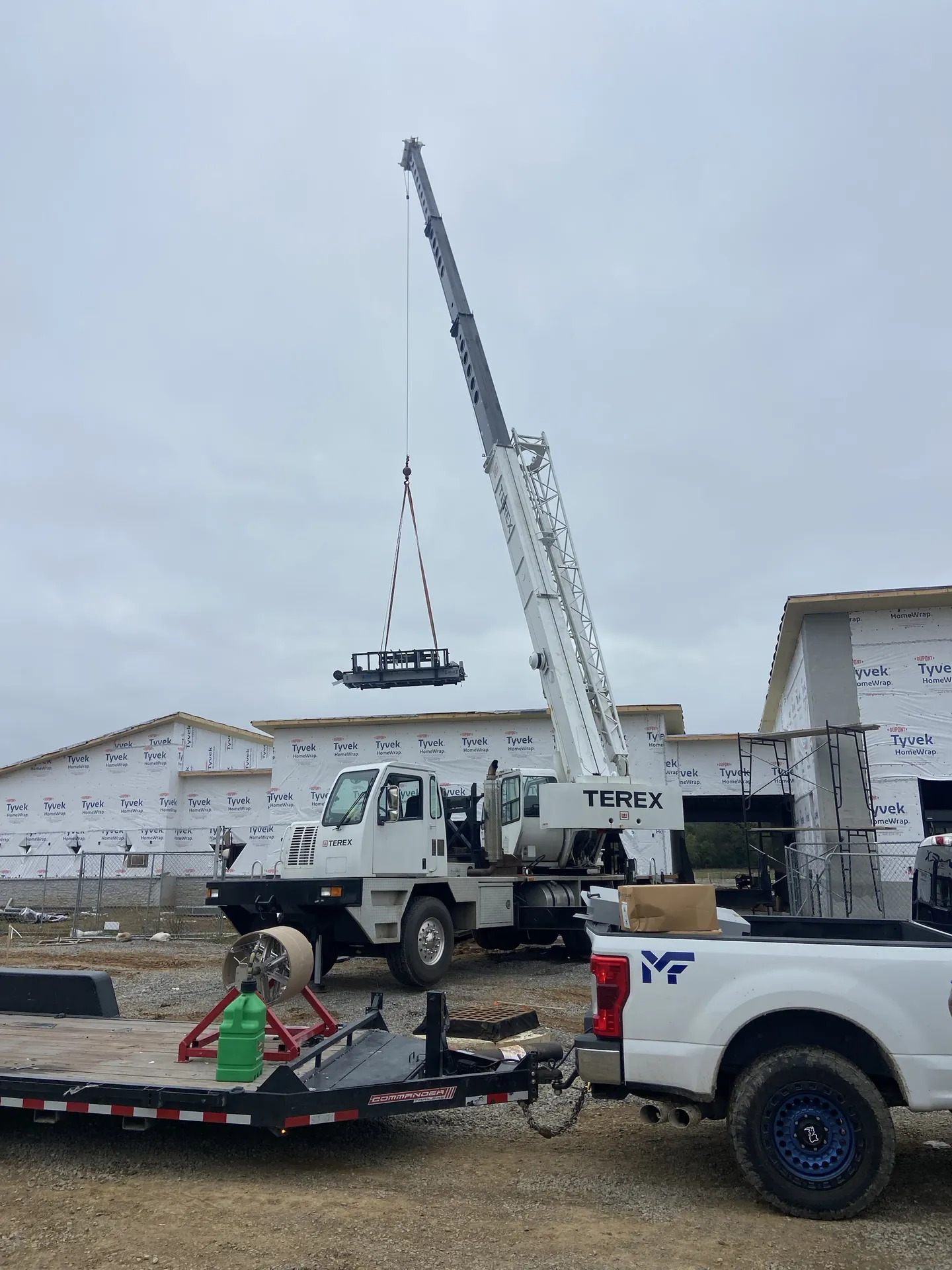
Most standing seam orders we run come off the machines in our Mt. Juliet shop and go out on a truck. Some jobs are better served by bringing the roll former to the site. Here’s how we decide which one fits, and what changes for your crew either way.
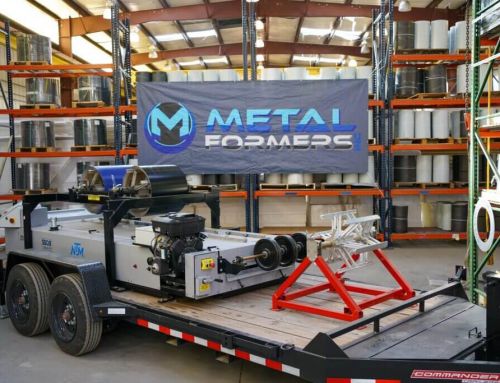
It’s the same machine, on a trailer
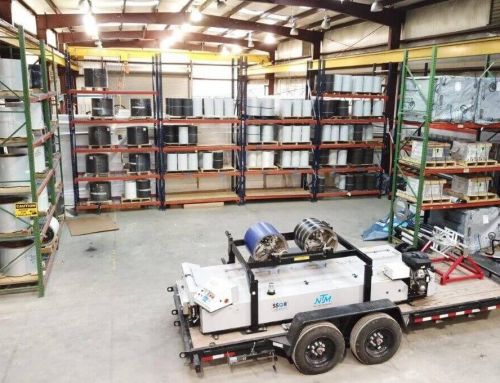
A portable roll former does the same thing a shop machine does, in a smaller package. Coil feeds off a decoiler, drive rollers pull it through a row of forming stations that bend the seams a little at a time, and a shear cuts each panel to the length on the cut list. New Tech Machinery, who builds the two portable machines we run, puts most portable roof panel machines at about 11 to 14 forming stations per side.
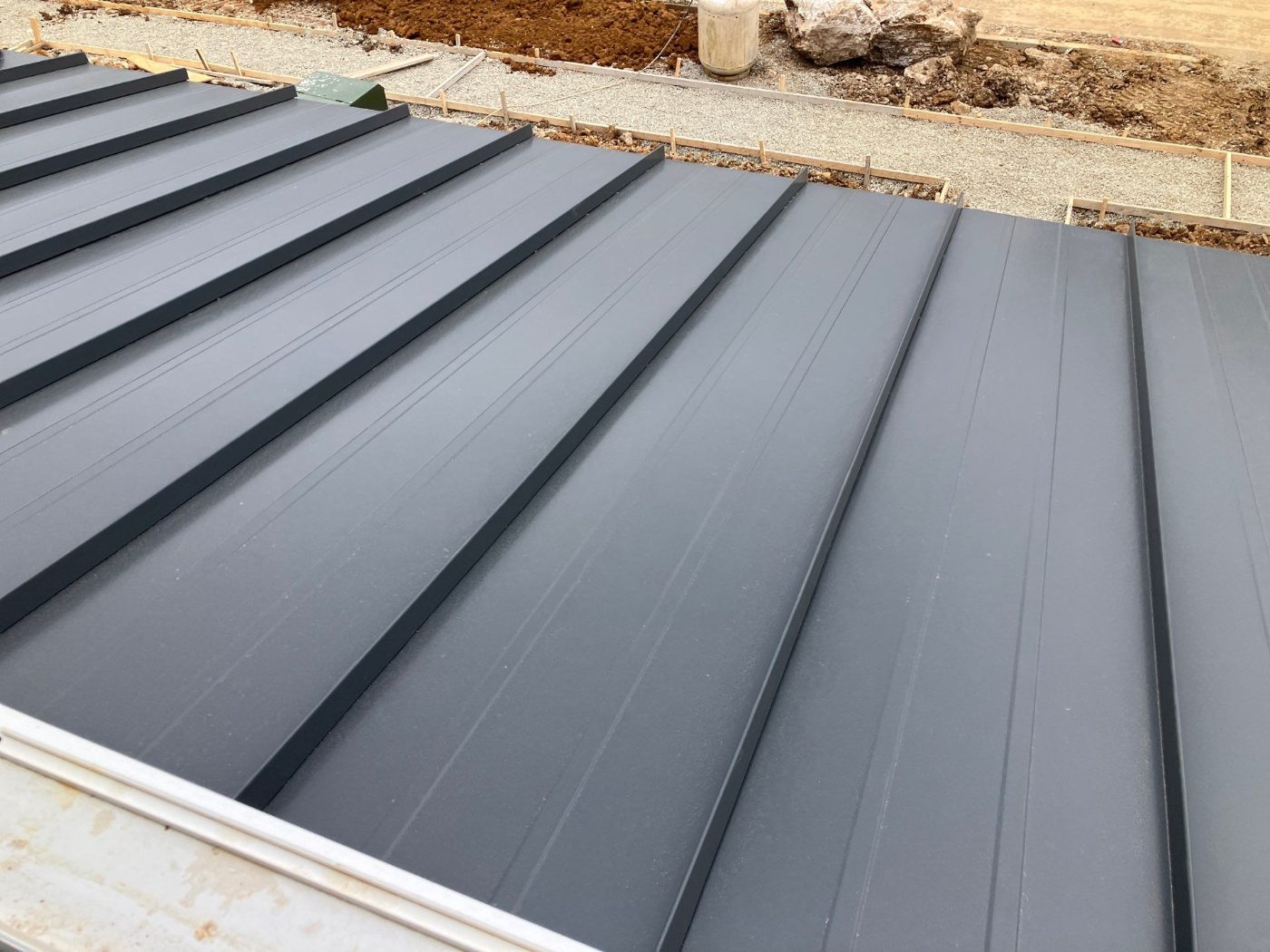
The panel is the same profile, gauge and paint whether it’s formed in the shop or in your driveway.
When a jobsite run makes sense
- Long panels. A 40 or 50 foot panel is hard to haul and harder to unload without kinking it. Forming it next to the building takes the trip out of the equation.
- Big jobs. On a large roof, running panels on site means the crew pulls panels as they need them instead of working around a stack that showed up all at once.
- Less handling. Every time a panel is loaded, strapped, unloaded and moved, it’s another chance for a scratch or a bent seam.
- Far-off jobs. We’ll take the machine to jobs within about a 20 hour drive of Nashville, as long as coil can be delivered there, and anywhere in the US for big projects.
When shop panels are the better call
- Lengths that fit on a truck. Most residential panels do. Most panel orders are ready in 1 to 2 days, and there’s no setup on site.
- Small jobs. A porch roof or a few additions don’t need a trailer and a crew of ours in your driveway.
- Tight or soft sites. The machine needs room for the truck and trailer, a clear route in, and flat ground near the roof. A muddy lot in February can turn a site run into a long day.
- Bad forecast. We check the weather before every run. Shop panels don’t care if it rains on Tuesday.
A few limits worth knowing
Portable machines top out on width. NTM notes that most portable roofing machines max out around 24 inches, which covers standing seam but leaves out some wide exposed fastener panels. Those come from in-plant equipment.
Changing profiles on a portable machine takes time too. NTM puts a roller changeover at about 45 minutes or less. If your job has two profiles, tell us when you book so we can plan the run around it.
And the portable machine only forms panels. Trim and flashing get bent in our shop, so put them on the same order when you book.
Not sure which one you need?
Send the job address and your takeoff, and we’ll tell you which way makes more sense. If it’s a site run, read what to have ready before we roll panels on your jobsite, and see our jobsite panel runs page to book. Or call Amy at 615-961-8470, Monday through Friday, 7 AM to 4 PM.
Got a takeoff? We’ll run it.
We roll form standing seam panels and bend matching trim at our shop in Mt. Juliet. Most panel orders are ready in 1 to 2 days, for pickup or delivered to your site.




Leave A Comment